
 Home > Achievement > 2025 Research Project List > Verification Of onion Healthy Seedling Cultivation Adaptation Technology in Pingtung and Tomato High Temperature and Drought Technology under Heavy Rainfall Situation in Tainan Home > Achievement > 2025 Research Project List > Verification Of onion Healthy Seedling Cultivation Adaptation Technology in Pingtung and Tomato High Temperature and Drought Technology under Heavy Rainfall Situation in Tainan |
Verification Of onion Healthy Seedling Cultivation Adaptation Technology in Pingtung and Tomato High Temperature and Drought Technology under Heavy Rainfall Situation in Tainan
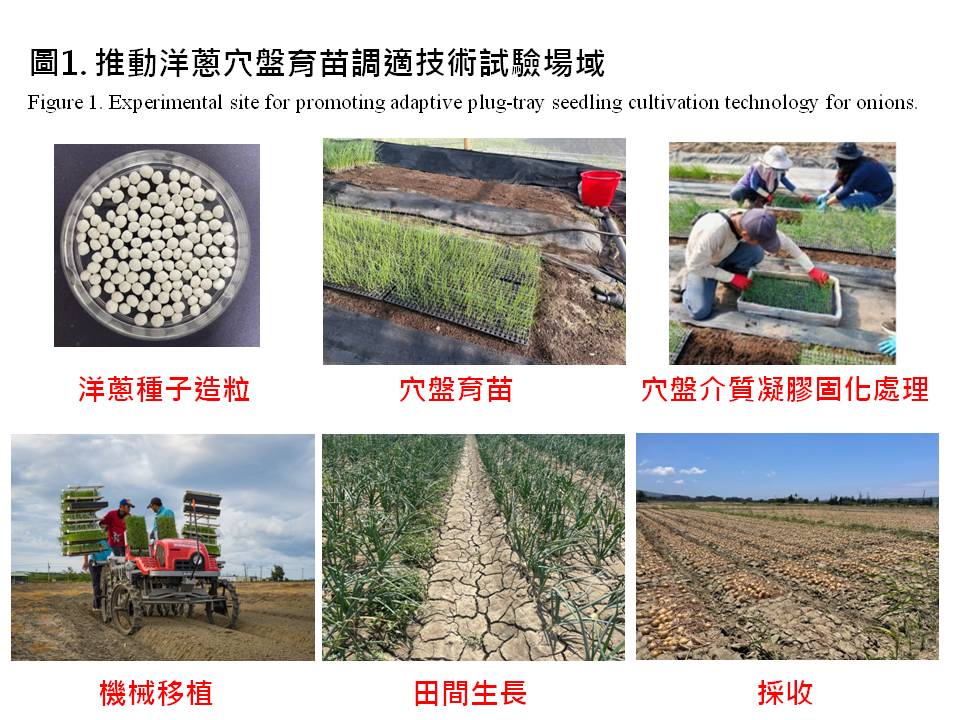
1.Establishment of Onion Plug-Tray Seedling Adaptation Techniques:
To mitigate damage caused by heavy rainfall on onion seedlings under climate change, plug-tray seedling adaptation techniques were developed this year. This included: Optimization of seed pelleting technology: Pelleted seeds formulated with 10% of super-absorbent polymer B effectively improved germination rates.Improved plug-tray seedling management: A management model involving three times of leaf trimming and four fertilization events produced the highest-quality seedlings. Pre-transplant root solidification: Applying 0.75% sodium polyacrylate for gel solidification prior to transplanting provided the best outcome, improving transplant efficiency and survival rate.
Integrating these three technologies and validated in the Hengchun area. Results showed that plug-tray seedlings had higher total weight than direct-seeded seedlings, indicating that plug-tray seedling production offers yield-enhancing benefits.
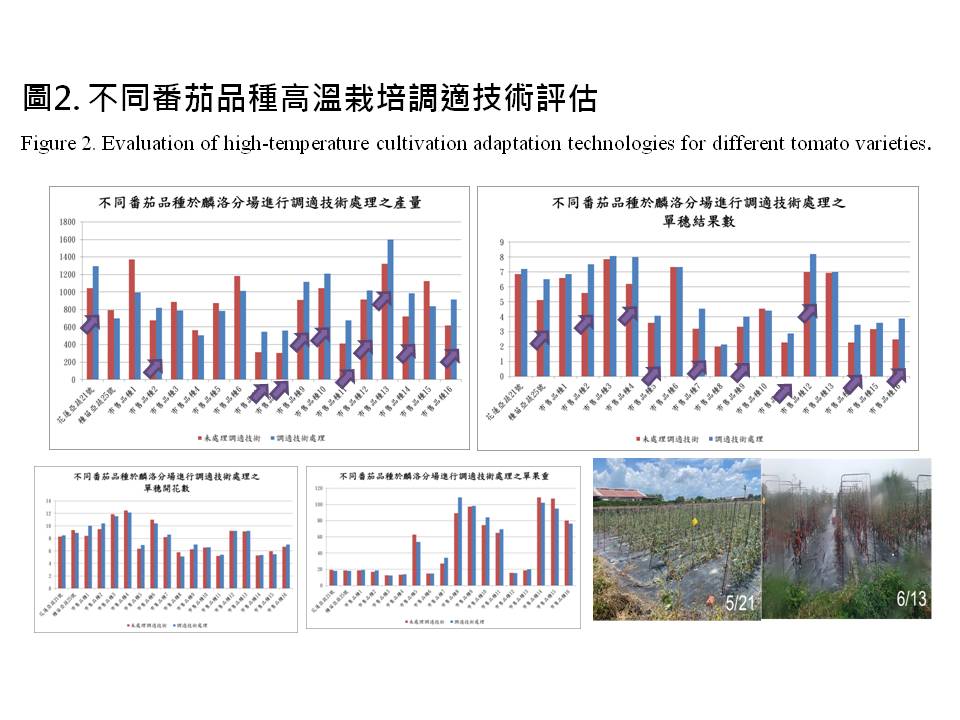
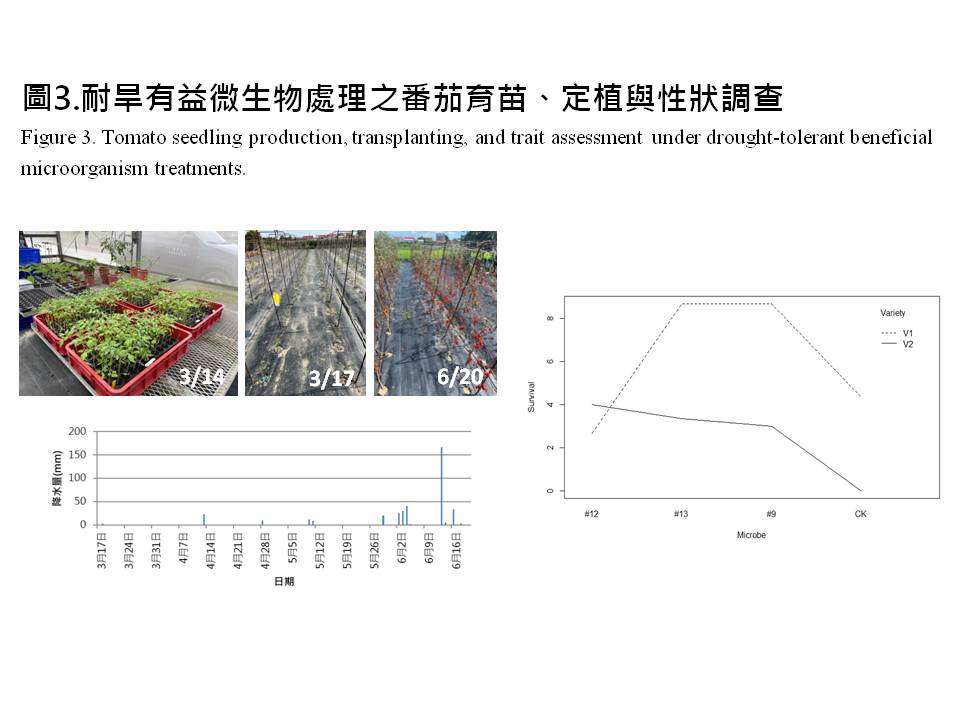
2.Tomato High-Temperature Cultivation Adaptation Techniques:
To address the impacts of climate change–induced high temperatures and drought on tomato production, this year we aim to evaluate the applicability of the heat-stress and drought adaptation techniques for tomato established in the previous year across different tomato cultivars, and to conduct field validation in the Yanshui District, Tainan of Tainan. The experimental results indicate that while the applicability of the technique varies among cultivars, it generally contributes to improved tomato production during periods of high temperature and improve plant survival rate under drought.
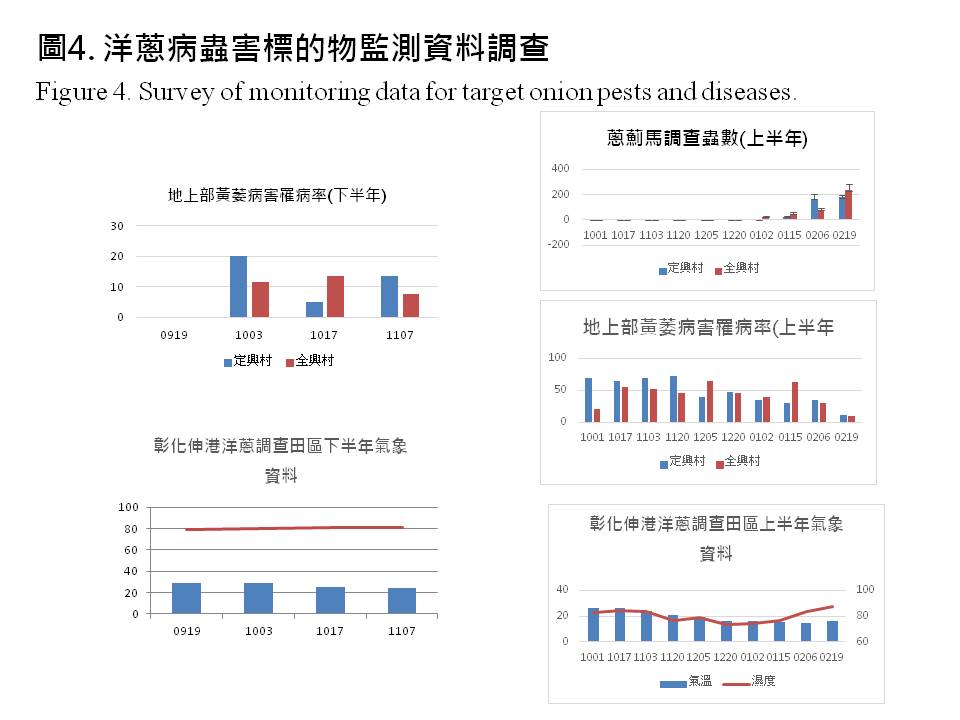
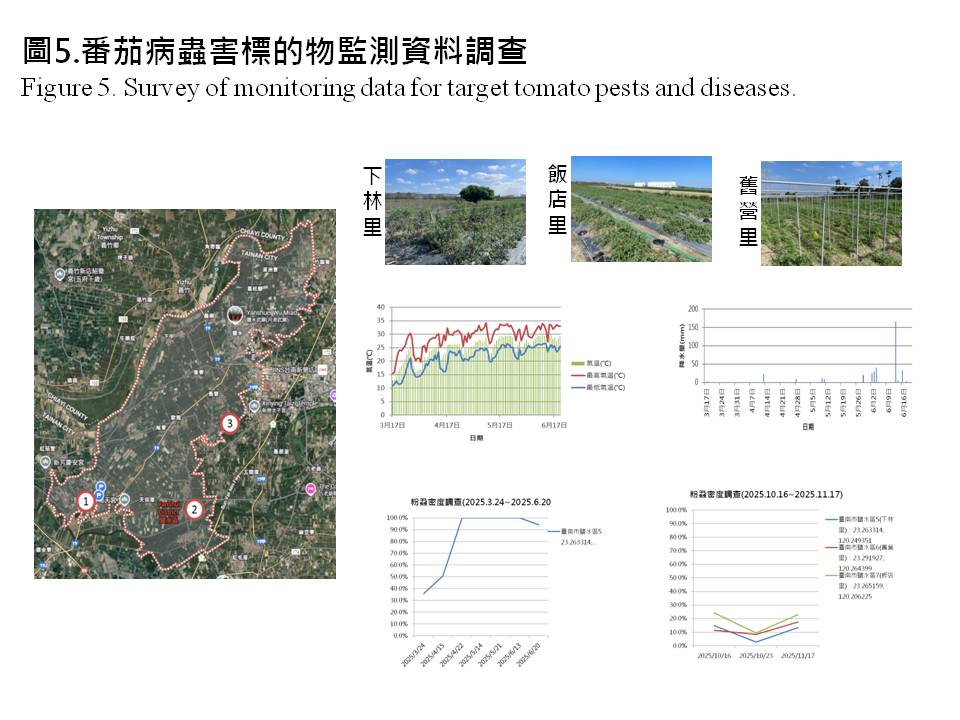
3.Establishment of Pest and Disease Early-Warning Systems:
To enhance crop protection efficiency under climate change, surveys were conducted this year on the occurrence frequency of onion thrips and Fusarium wilt in Changhua, as well as tomato leaf curl virus and whitefly populations in Yanshui, Tainan. Combined with data from nearby weather stations, regional pest and disease monitoring was completed, and an early-warning mechanism was established to support future climate-changeresponsive pest management.
 |
 |
|
 |
 |
|
 |